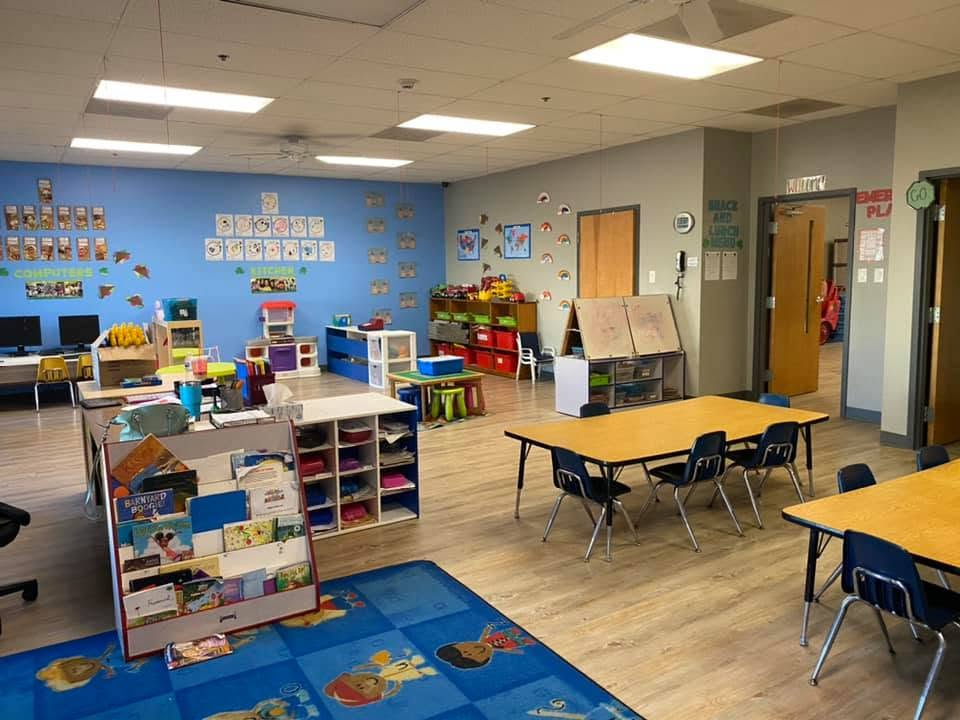
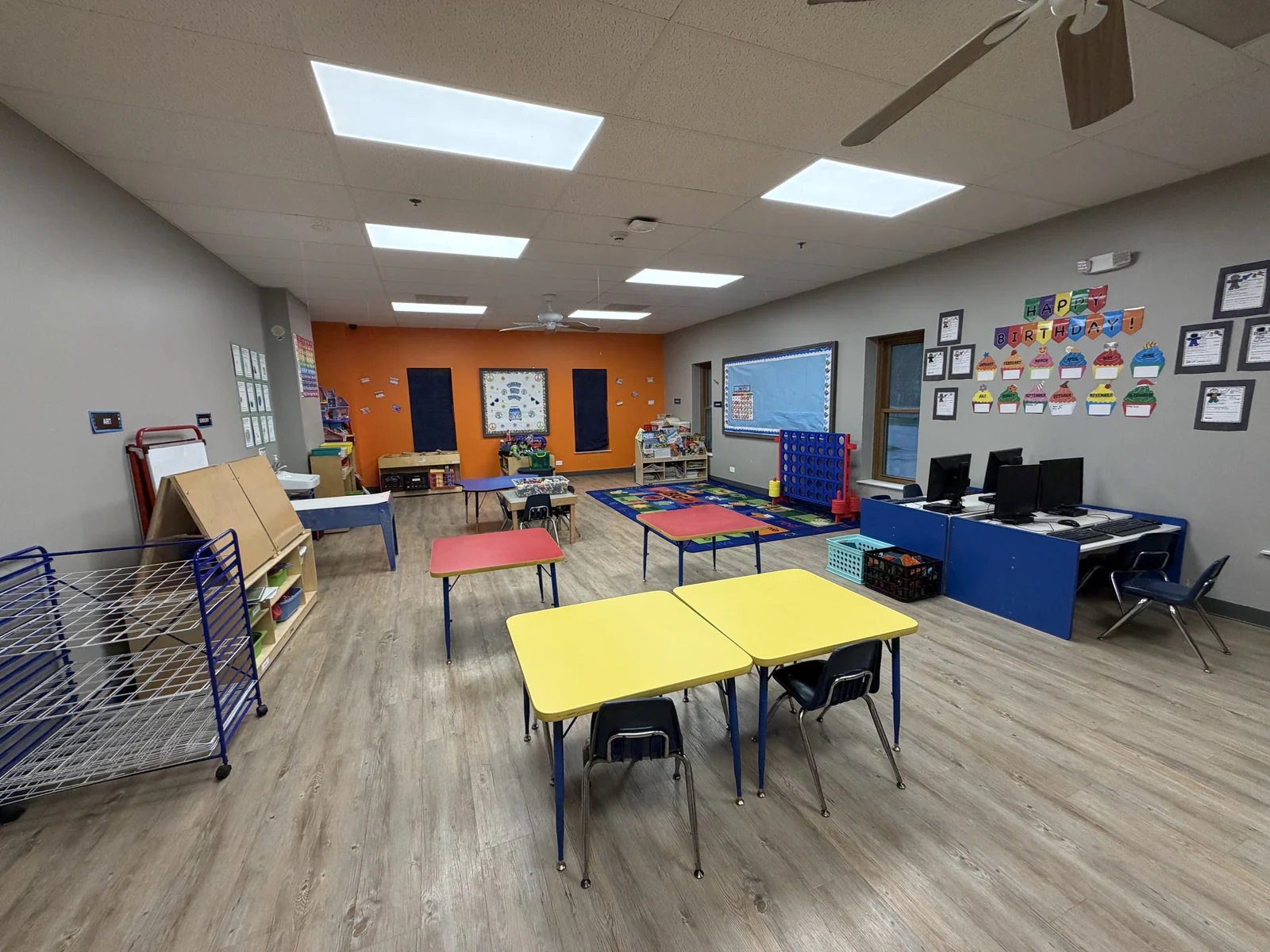
6 weeks through 12 years

Room to grow at every age

Children progress through individualized care, meaningful play, curriculum-based activities, monthly learning themes, and increasingly independent classroom routines from infancy through school age.

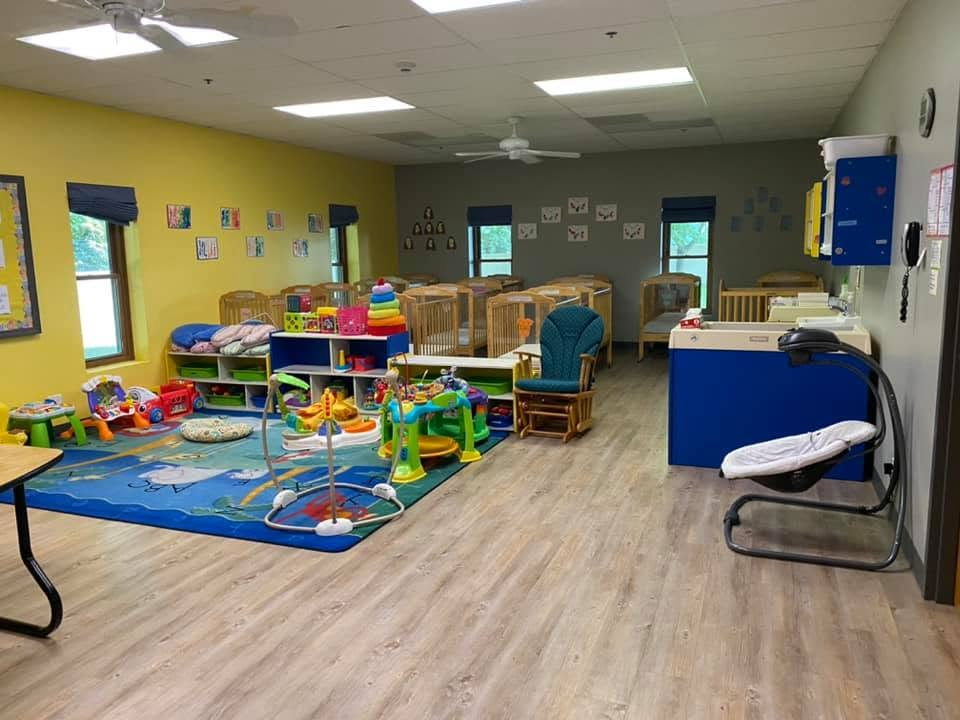
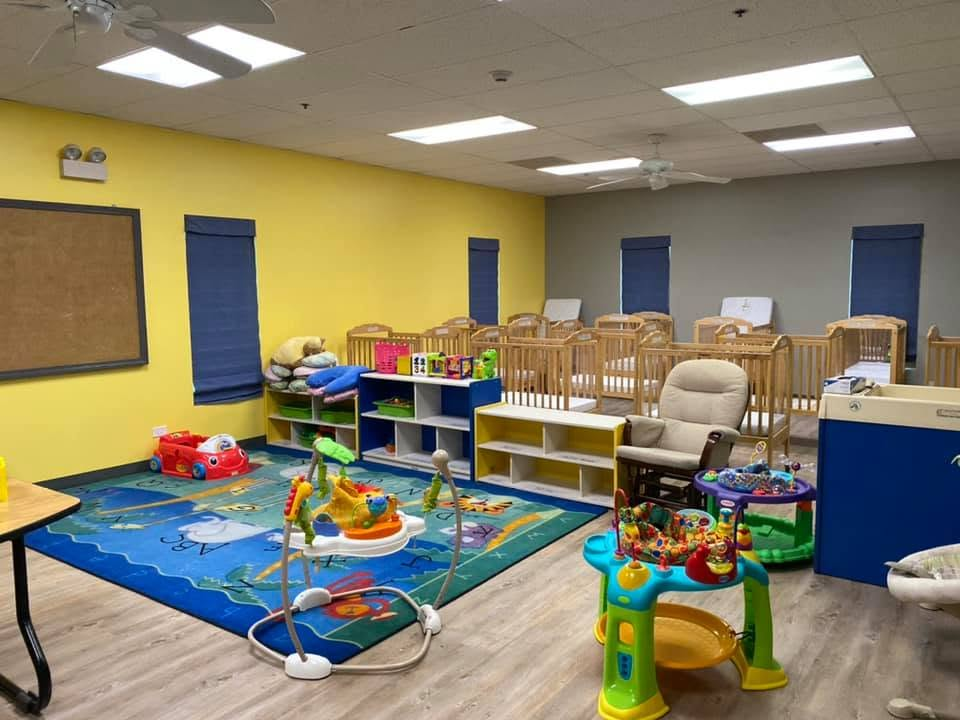
6 weeks–15 months

Infant Room
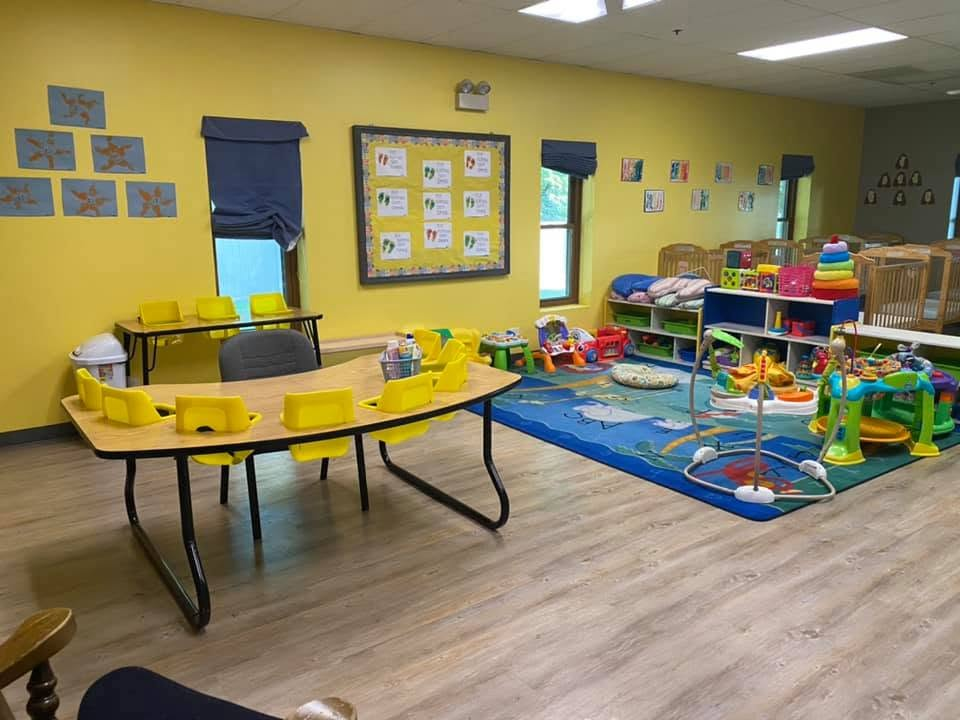
Infant Room details

Individualized care supports gross- and fine-motor development, sensory learning, language, cognition, well-being, and a positive self-concept.

  • Individual schedules vary by need and include arrival and breakfast, supervised play, diaper checks, stories and planned activities, music, lunch, nap, afternoon snack, and play.
  • Infant routines follow individual needs. Table-food snacks are offered when appropriate, lunch is served at noon, and nap follows lunch and diaper care.
  • Staff-to-child ratio: 1:4; licensed capacity: up to 12 children
  • Families receive a daily sheet describing activities for their infant or toddler.
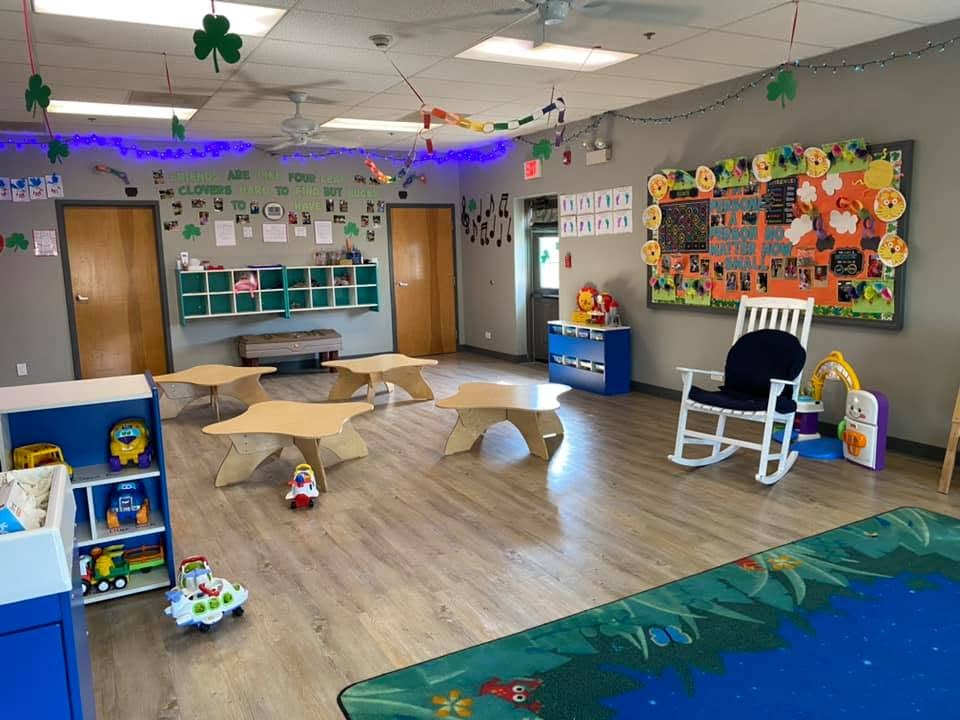
15 months–2 years

Toddler Room

Toddler Room details

The toddler program supports movement, sensory learning, language, cognition, motor development, social growth, and a positive self-concept through care and planned play.

  • The day includes breakfast, supervised play, diaper changes, snack, stories and planned activities, music, lunch, nap, afternoon snack, and free play.
  • Potty and diaper care are built into the daily routine. Families supporting potty training should provide several changes of clothing.
  • Staff-to-child ratio: 1:5; licensed capacity: up to 15 children
  • Support age-appropriate communication, independence, social-emotional growth, motor development, creativity, and early academic skills.

2 years old

2-Year-Old Room

2-Year-Old Room details

Morning curriculum activities develop fine-motor and cognitive skills, while art, movement, centers, outdoor or big-room play, and afternoon free play support the whole child.

  • The day includes breakfast, free play, potty or diaper care, snack, circle time, big-room or playground time, art and learning activities, lunch, nap, afternoon snack, and play.
  • Potty and diaper care are built into the daily routine. Families supporting potty training should provide several changes of clothing.
  • Staff-to-child ratio: 1:8; licensed capacity: up to 16 children
  • Support age-appropriate communication, independence, social-emotional growth, motor development, creativity, and early academic skills.

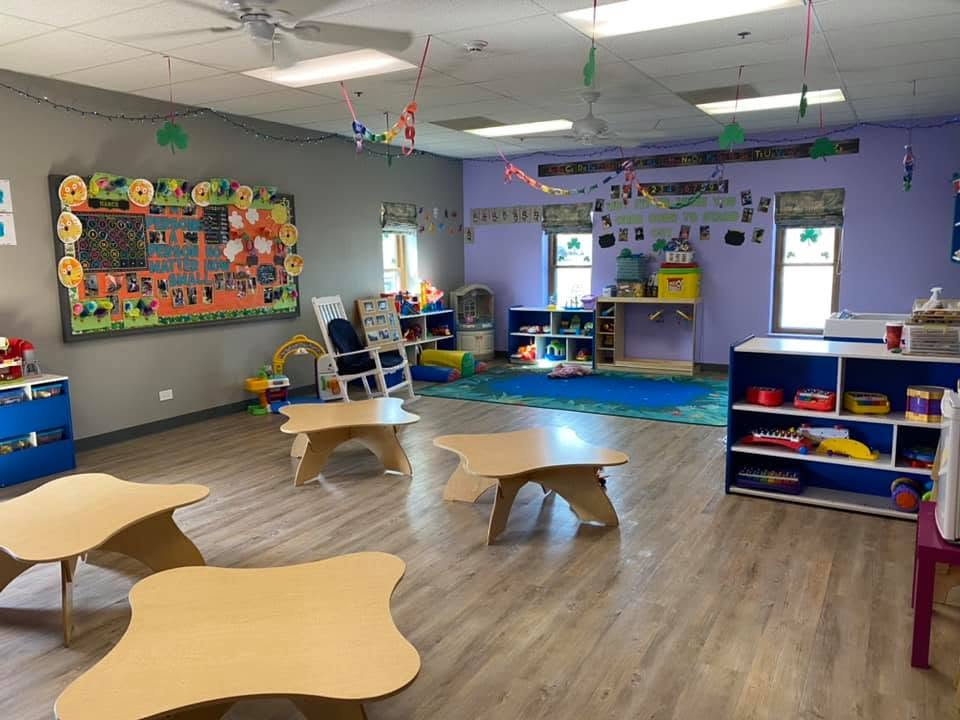
3 years old

3-Year-Old Room

3-Year-Old Room details

Children learn through circle time, music, large-motor play, school work, art, table toys, reading, centers, and free play.

  • The routine includes breakfast and play, snack, circle and music, large-motor activity, school work, art, table toys, lunch, rest, reading, centers, and afternoon play.
  • Monthly themes connect colors, numbers through 15, shapes, letters, and science topics such as living and non-living things, matter, motion, senses, temperature, life cycles, and light.
  • Staff-to-child ratio: 1:10; licensed capacity: up to 20 children
  • Support age-appropriate communication, independence, social-emotional growth, motor development, creativity, and early academic skills.

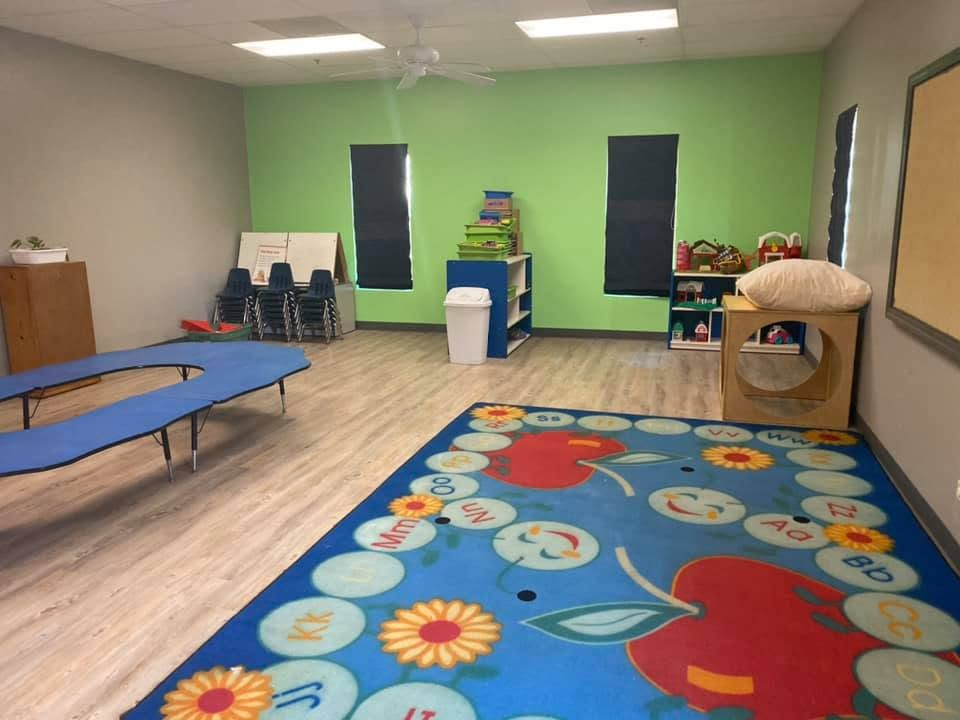
4–5 years old

Pre-K Room

Pre-K Room details

Pre-K combines circle time, focused school work, art, centers, physical activity, and monthly curriculum themes that prepare children for increasingly independent learning.

  • The routine includes arrival and breakfast, play, snack, circle time, school work, big-room or playground time, art, lunch, rest, folders, centers, and afternoon play.
  • The scope and sequence builds number knowledge through 50, counting by 2s and 5s, alphabet knowledge and review, shapes, colors, and hands-on science concepts.
  • Staff-to-child ratio: 1:10; licensed capacity: up to 20 children
  • Support age-appropriate communication, independence, social-emotional growth, motor development, creativity, and early academic skills.

5–12 years old

Advanced Pre-K/School Age Room

Advanced Pre-K/School Age Room details

Kindergarten and school-age care balance focused learning, reading, math, art, centers, quiet time, homework support, physical activity, and free play.

  • Kindergarten days include breakfast and play, snack, centers, reading, circle and work time, lunch, quiet time, math, art, and afternoon play. Before- and after-school care includes breakfast or snack, bus preparation, homework support, and free play.
  • Before-school children prepare to board the bus in the morning. After-school children arrive from the bus, wash hands, have snack, and receive time for homework and play.
  • Staff-to-child ratio: 1:20; licensed capacity: up to 20 children
  • Support school readiness and school success through literacy, math, creative work, homework time, movement, social development, and recreation.

A look at the day

Sample Daily Schedule

This sample schedule appears in our handbook. Classroom schedules may be adjusted to support children’s ages and daily needs.

  1. Arrival and breakfast
  2. Free play
  3. Clean up
  4. Snack
  5. Circle time
  6. School work
  7. Big room or playground
  8. Art
  9. Clean up and prepare for lunch
  10. Lunch
  11. Nap time
  12. Prepare for snack
  13. Snack
  14. Collect work and put it in folders
  15. Centers
  16. Big room or playground
  17. Free play and departure from the center

Which program feels right?

Tour our classrooms and talk through your child’s needs with our team.